Professional Fire Damage Restoration & Smoke Cleanup Across Australia
Structural fire damage and smoke odour removal require certified expertise — not generalised builders. Access vetted IICRC FSRT-certified contractors with 24/7 emergency response across all Australian states.
How Fire Damage Restoration Works
Fire restoration follows a structured process aligned to the IICRC S200 Standard. Each phase is documented for insurance purposes, and work is performed by contractors holding IICRC FSRT certification independently.
Immediate Assessment (First 4 Hours)
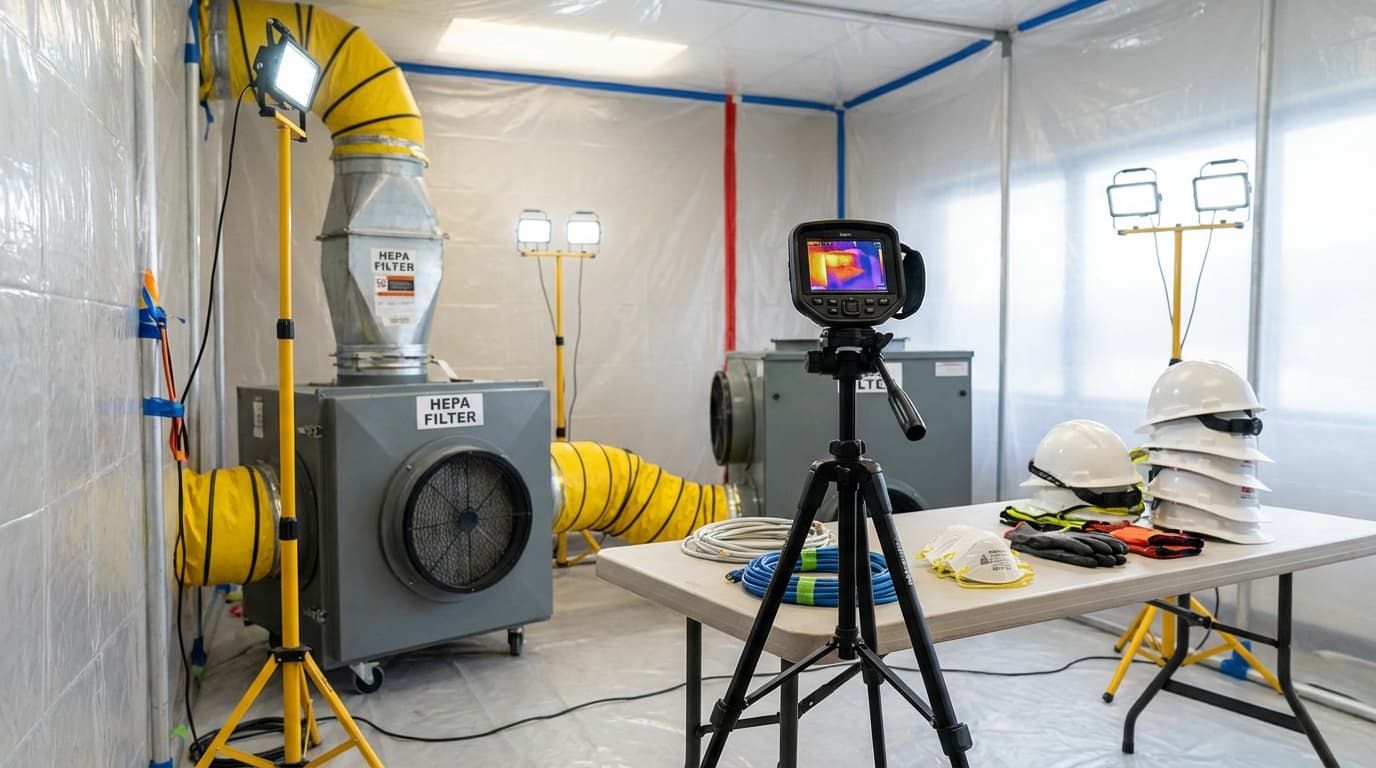
Once emergency services clear the property, a certified assessor conducts a fire restoration assessment to document structural damage, smoke penetration, and water ingress from firefighting operations. This initial report forms the foundation of the insurance claim scope. Photographs, moisture readings, and air quality samples are collected to establish a pre-restoration baseline. Properties that have sustained structural fire damage are secured with emergency board-up, tarping, or temporary fencing to prevent further deterioration and unauthorised access.
Containment & Decontamination (24–72 Hours)
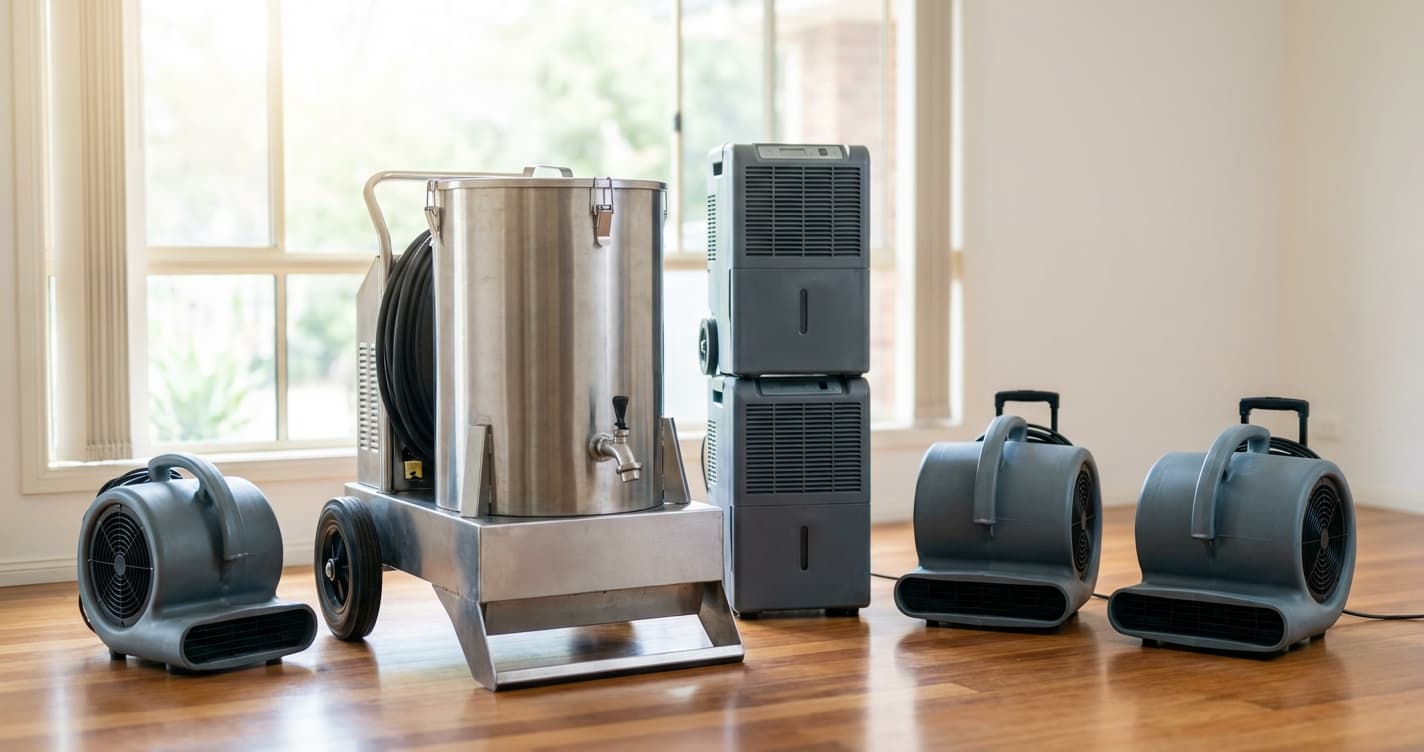
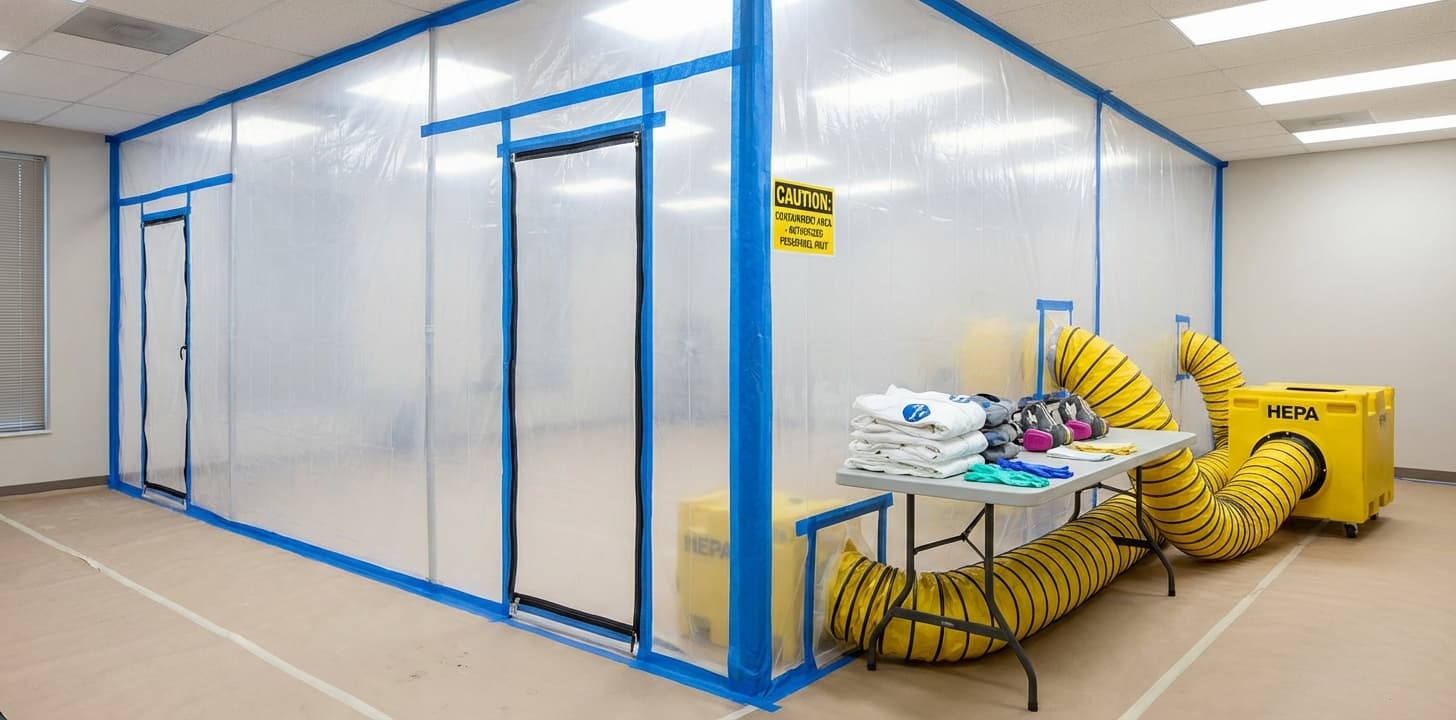
Soot and smoke residue are acidic and corrosive — within 24–72 hours they permanently etch glass, discolour grout, corrode metal fixtures, and penetrate timber grain. Containment zones are established to prevent cross-contamination of unaffected areas. IICRC FSRT-certified technicians then begin decontamination: HEPA vacuuming of loose particulates, dry chemical sponging of soot from walls and ceilings, and cleaning of HVAC systems to prevent smoke odour recirculation. Charred structural materials are removed and catalogued for insurance documentation. Firefighting water — a common secondary hazard — is extracted using the same protocols as a standard water damage event to prevent mould formation.
Restoration & Rebuild Coordination
Following decontamination, the scope of structural repair is confirmed with the insurer. Certified contractors coordinate all required trades — structural carpentry, electrical, plumbing, plastering, and painting — under a single scope of works. Final air quality testing and odour clearance testing confirm the property meets habitable standards before reinstatement. A full completion report with before/after documentation is produced for the insurance file.
What's Included in the Fire Restoration Process
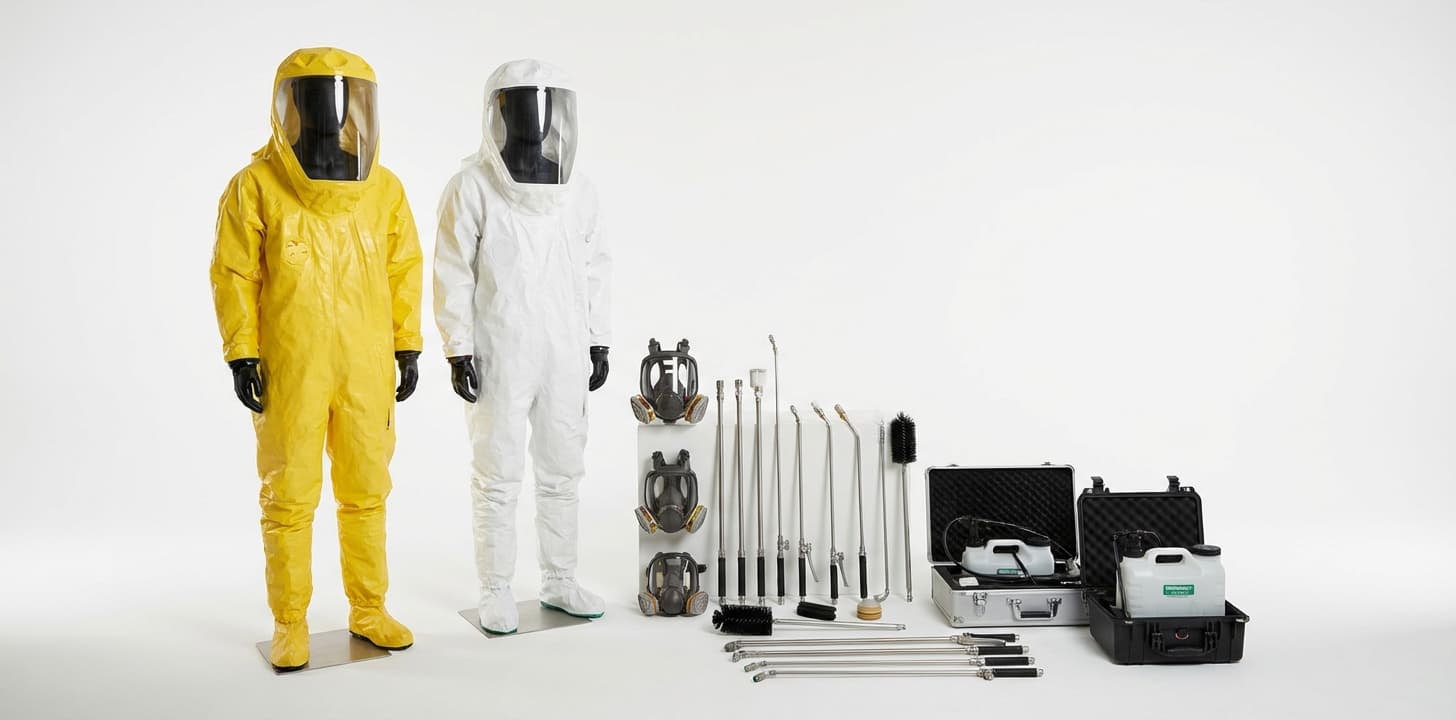
A full fire restoration engagement covers every phase from initial emergency response through to habitation clearance. Services delivered by matched contractors include:
Fire Damage vs. Smoke Damage: Key Differences
Fire and smoke damage are distinct in their behaviour, spread, and remediation requirements — yet both are covered under standard IICRC FSRT protocols.
Structural Fire Damage
- • Direct heat causes char, carbonisation, and material failure
- • Confined to burn path — does not travel through cavities
- • Requires structural assessment and engineering sign-off
- • Debris removal follows hazardous material protocols
- • Covered under building sum insured
Smoke Damage
- • Travels through air currents — affects rooms distant from burn
- • Deposits acidic residue on all surfaces including undamaged areas
- • Smoke odour removal requires specialist equipment and treatment
- • HVAC systems become contaminated and require full decontamination
- • Often covered separately as contents or smoke damage loss
For properties where smoke has spread beyond the fire area, see the dedicated smoke damage cleanup service page. Properties with secondary water ingress from firefighting should also review water damage restoration to understand combined claim scoping.
IICRC FSRT Certification: What It Means for Your Claim
IICRC FSRT — Fire & Smoke Restoration Technician — is the internationally recognised certification standard for fire and smoke restoration work. It is distinct from other IICRC certifications: FSRT covers fire chemistry, smoke behaviour, odour removal chemistry, and documentation protocols. S520 is the mould remediation standard and has no overlap.
The IICRC S200 Standard for Professional Fire & Smoke Damage Restoration sets the methodology all certified contractors follow. Insurers including NRMA, Suncorp, Allianz, QBE, IAG, and CGU increasingly require IICRC FSRT certification as a condition of approving scopes of works submitted by restoration contractors.
Using a non-certified contractor risks claim disputes, scope rejections, and callbacks for incomplete remediation. Each contractor matched through the platform holds IICRC FSRT certification independently and maintains their own professional indemnity insurance.
Learn more about contractor certification requirements on the certifications page. For background on the platform and matching process, visit the about page.
The Australian Insurance Claims Process
Fire damage claims in Australia are governed by the Insurance Contracts Act 1984 and the General Insurance Code of Practice. The process follows a broadly consistent structure across NRMA, Suncorp, Allianz, QBE, IAG, and CGU.
Contact your insurer to lodge a fire damage claim as soon as the property is safe to access. Most insurers require notification within a defined period — check your Product Disclosure Statement for exact timeframes.
The insurer will appoint a loss adjuster or building assessor to inspect the property and prepare a scope of works. Property owners can engage their own IICRC FSRT-certified contractor to provide an independent scope — this is often advisable for complex structural fire damage.
The insurer reviews submitted scopes and issues an agreed scope of works. This stage can involve negotiation, particularly where hidden smoke damage or secondary water damage is present. Detailed documentation from IICRC FSRT assessors supports scope acceptance.
Once the scope is approved, matched contractors begin work under the agreed scope. Progress reports and photographic documentation are provided throughout.
If the insurer disputes the scope or claim, property owners have the right to escalate to the Australian Financial Complaints Authority (AFCA). AFCA is the external dispute resolution body for Australian financial services complaints. Claims involving the NSW Strata Management Act or VIC Fire Code may have additional regulatory considerations.
The platform facilitates contractor matching and does not act as an insurance claim advocate or control claim outcomes. For independent claims assistance, property owners may engage a public loss assessor. For insurer disputes, AFCA provides free external resolution services at afca.org.au.
Frequently Asked Questions
How long does fire restoration take?
Timeline depends on damage severity. Minor smoke damage may resolve in 3–7 days. Moderate structural damage typically takes 2–6 weeks. Major fires requiring full reconstruction can span 3–12 months. IICRC FSRT-certified assessors provide a written scope and estimated timeline during the initial assessment.
Does homeowners insurance cover fire restoration?
Most standard Australian home and contents policies cover fire damage restoration costs, including debris removal, structural repairs, smoke odour removal, and temporary accommodation. Policy conditions vary between insurers including NRMA, Suncorp, Allianz, QBE, IAG, and CGU. Review your Product Disclosure Statement or speak with your insurer directly.
What causes smoke odour and how do you remove it?
Smoke odour is caused by microscopic particles and volatile compounds that penetrate porous surfaces — timber, plaster, carpet, and soft furnishings. Certified contractors using IICRC FSRT protocols remove odour through a combination of HEPA vacuuming, hydroxyl generation, ozone treatment, thermal fogging, and encapsulation of sealed surfaces. Surface cleaning alone rarely eliminates deep-set smoke odour.
Can I DIY fire cleanup?
DIY fire cleanup is not recommended and can be hazardous. Fire-damaged properties may contain carcinogenic soot, asbestos (in older homes), structural instability, compromised electrical wiring, and toxic chemical residues. Under NSW and VIC fire codes, structural work following fire events must be assessed by qualified professionals. IICRC FSRT-certified contractors have the equipment, training, and insurance required for safe remediation.
How soon should I start restoration after a fire?
Restoration should begin as soon as emergency services clear the property for access — ideally within 24–48 hours. Delay allows smoke residue to permanently stain surfaces, acidic byproducts to corrode metals and etch glass, and moisture from firefighting water to promote secondary mould growth. Early assessment also preserves evidence for insurance claims.
What's the difference between IICRC and non-certified contractors?
IICRC FSRT (Fire & Smoke Restoration Technician) certification verifies a contractor has completed structured training in fire chemistry, smoke behaviour, odour removal, and restoration documentation to IICRC S200 Standard. Non-certified contractors lack standardised protocols and may use incorrect cleaning agents that set stains, miss hidden damage, or produce reports insufficient for insurance claim purposes. Each contractor on the platform holds their own IICRC certification independently.
Do you work directly with insurers?
The platform facilitates matching property owners with vetted, IICRC-certified contractors. Those contractors are experienced in producing insurance-grade documentation, scope reports, and photographic evidence compatible with major Australian insurers including NRMA, Suncorp, Allianz, QBE, IAG, and CGU. The platform does not control claim outcomes or act as a claim advocate — that is a matter between you, your insurer, and your contractor.
What if my property has hidden fire or smoke damage?
Hidden damage is common after fires. Smoke travels through wall cavities, roof spaces, and HVAC ducting, depositing residue far from the burn origin. Certified assessors use thermal imaging, air quality testing, and visual inspection of concealed spaces to identify hidden damage. Under AFCA complaint guidelines, insurers are required to assess the full scope of damage — not just visible surface loss.